

Standard Tip
A straight, flat tip used for general-purpose cutting. Best used for standard wood and metal cutting where plunge cutting isn’t required.


A Complete Guide
Spyder® Reciprocating Saw Blades are built for a wide range of cutting, scraping, and material removal tasks—from tearing through nail-embedded wood and cutting metal to shaping masonry or stripping flooring. Each job places different demands on the blade, which is why factors like tooth design, material, length, and teeth-per-inch all play a critical role in performance. Coarser teeth power through fast demolition cuts, while finer teeth deliver cleaner results in metal or finish work, and specialized blades are designed for everything from pruning to abrasive materials. Choosing the right blade isn’t just about getting the cut done—it’s about working faster, extending blade life, and achieving better results with less effort. Use the guides and charts below to match your application with the ideal blade, so every cut is efficient, controlled, and backed by the right Spyder® solution.
ANATOMY
Engineered for Speed, Durability, and Versatility


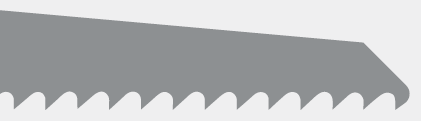
Standard

Tapered

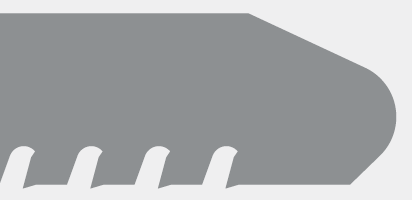
Plunge-Cut

Flush-Cut
Blade length options

The number of teeth per inch, affecting the speed and smoothness of the cut

Good for wood, demolition and pruning

Ideal for PVC, plastics and thick metals

Ideal for metal and fine work (slow)
High-Durability Carbide, Mach-Blue® Plated, 8% Cobalt Bi-Metal, and High Carbon Steel


• Evenly spaced teeth for consistent cutting
• Provides a balance between speed and smoothness
• Best for general-purpose wood, plastic, and soft materialsr a bulleted list here.

• Teeth are arranged in a wave-like pattern
• Helps prevent snagging and provides a fine, smooth cut
• Best for thin metal, sheet metal, and tubing

• Teeth are grouped in sets (with larger spaces between groups)
• Allows for aggressive cutting with better material removal
• Great for demolition, and heavy-duty metal cutting

• Teeth face the opposite direction from standard blades
• Reduces splintering on the top surface of materials
• Commonly used for laminates, plywood, and fine woodworking

• Teeth have a chamfered edge and are higher than the raker
• Cleaner cut with minimal tear-out when cutting brittle materials
• Commonly used for laminates, MDF, and composites

• Each tooth has a small carbide tip for extra durability
• Extremely tough and lasts much longer than standard blades
• Used for cutting thick metal, stainless steel, and cast iron

• Teeth are ground at alternating angles to create razor-sharp cutting edges
• Cuts in both directions for faster, smoother results in wood and green materials
• Ideal for pruning, rough wood cutting, and outdoor demolition applications

• A mix of different TPI sizes along the blade
• Reduces vibration and provides smoother cuts
• Ideal for metal, multi-material, and demolition work

• Blade edge is coated with diamond grit instead of teeth
• Provides smooth cuts with no risk of tooth breakage
• Used for masonry, tile, glass, and cement board
A straight, flat tip used for general-purpose cutting. Best used for standard wood and metal cutting where plunge cutting isn’t required.
A narrower blade with a pointed tip. Provides better maneuverability and access to tight spaces. Ideal when cutting in corners, flush cutting, or making curved cuts.
A pointed or curved tip. Allows the blade to pierce into the material without needing a pre-drilled hole. Necessary for starting cuts in the middle of drywall, wood, or plastic
(e.g., cutting electrical box openings).

A specially shaped tip that allows the blade to cut flat against a surface. Enables cutting off protruding nails, bolts, or pipes close to a surface. Perfect when trimming flush against walls or flooring.

Use a low TPI (6-10) blade for fast rough cuts

Use a bi-metal blade (6-10 TPI) for durability

Use a high TPI (18-24+ TPI) bi-metal or carbide blade for a smooth cut

Use a lower TPI (10-14) with carbide teeth for aggressive cutting

Use a medium TPI (10-14) for smooth cuts without melting

Use a carbide-tipped or thick bi-metal blade (6-10 TPI) for strength and durability

Use a special pruning blade (3-6 TPI), with deep gullets to clear debris
Flexible, best for wood and softer materials
More durable, good for harder materials like metal
HCS body with HSS teeth combines flexibility and strength for durable wood and metal cutting
Extremely durable, best for cutting thick metal, stainless steel, and demolition work
Better for controlled, precise cuts
Best for deep cuts or demolition
More rigid for heavy-duty cutting (ideal for demolition)
More flexible for tight spaces and flush cutting
| APPLICATION | FAMILY/SECTION | 1-PK | 2-PK | 3-PK | 5-PK | 50-PK | SET | PAGE # |
|---|---|---|---|---|---|---|---|---|
|
Multi-Material
|
3X3® | 200176 | ||||||
|
Demolition
|
3X3® Advance Demolition | 200206 | ||||||
|
Demolition
|
3X3® Advance Demolition | 200207 | ||||||
|
Multi-Material
|
3X3® | 200179 | ||||||
|
Multi-Material
|
3X3® | 200203 | ||||||
|
Multi-Material
|
3X3® Extreme | 200205 | ||||||
|
Multi-Material
|
3X3® Extreme | 200204 | ||||||
|
Multi-Material
|
3X3® | 200228 | ||||||
|
Metal Cutting
|
3X3® | 200180 | ||||||
|
Wood/Nails
|
Mach-Blue® | 200321 | ||||||
|
Wood/Nails
|
Mach-Blue® | 200323 | ||||||
|
Multi-Material
|
Mach-Blue® | 200319 | ||||||
|
Multi-Material
|
Mach-Blue® | 200322 | ||||||
|
Multi-Material
|
Mach-Blue® | 200324 | ||||||
|
Multi-Material
|
Mach-Blue® | 200320 | ||||||
|
Wood/Nails
|
Black Series™ (Nail-Embedded) | 200423 | 200304* 200423-5• |
200304-50 | ||||
|
Wood/Nails
|
Black Series™ (Nail-Embedded) | 200424 | 200424-5 | |||||
|
Wood/Nails
|
Black Series™ (Nail-Embedded) | 200441 | 200306 | 200306-50 | ||||
|
Multi-Material
|
Black Series™ (Multi-Material) | 200393 | 200393-5 | |||||
|
Multi-Material
|
Black Series™ (Multi-Material) | 200394 | 200394-5 | |||||
|
Multi-Material
|
Black Series™ (Multi-Material) | 200443 | ||||||
|
Multi-Material
|
Black Series™ (Multi-Material) | 200440 | 200440-5 | |||||
|
Multi-Material
|
Black Series™ (Multi-Material) | 200305 | 200305-50 | |||||
|
Multi-Material
|
Black Series™ (Multi-Material) | 200307 | 200307-50 | |||||
|
Multi-Material
|
Black Series™ (Multi-Material) | 200355 | ||||||
|
Multi-Material
|
Black Series™ (Multi-Material) | 200308 | ||||||
|
Multi-Material
|
Black Series™ (Multi-Material) | 200442 | ||||||
|
Metal Cutting
|
Black Series™ (Metal Cutting) | 200428 | 200428-5 | |||||
|
Metal Cutting
|
Black Series™ (Metal Cutting) | 200430 | 200430-5 | |||||
|
Metal Cutting
|
Black Series™ (Metal Cutting) | 200429 | 200429-5 | |||||
|
Metal Cutting
|
Black Series™ (Metal Cutting) | 200431 | 200431-5 | |||||
|
Metal Cutting
|
Black Series™ (Metal Cutting) | 200444 | ||||||
|
Metal Cutting
|
Black Series™ (Metal Cutting) | 200396 | 200303* 200396-5• |
200303-50 | ||||
|
Metal Cutting
|
Black Series™ (Metal Cutting) | 200397 | 200397-5 | |||||
|
Metal Cutting
|
Black Series™ (Metal Cutting) | 200398 | 200398-5 | |||||
|
Metal Cutting
|
Black Series™ (Metal Cutting) | 200399 | 200399-5 | |||||
|
Fire Rescue
|
Black Series™ Fire Rescue | 200425 | 200302* 200425-5• |
200302-50 | ||||
|
Fire Rescue
|
Black Series™ Fire Rescue | 200426 | 200426-5 | |||||
|
Demolition
|
Black Series™ Extreme | 200406 | 200406-5 | |||||
|
Demolition
|
Black Series™ Extreme | 200407 | 200407-5 | |||||
|
Demolition
|
Black Series™ Extreme | 200408 | 200408-5 | |||||
|
Demolition
|
Black Series™ Extreme | 200427 | 200427-5 | |||||
|
Demolition
|
Black Series™ Extreme | 200410 | ||||||
|
Demolition
|
Black Series™ Extreme | 200436 | ||||||
|
Masonry/Metal Cutting
|
Diamond Bite™ | 200433 | 200433-5 | |||||
|
Multi-Material
|
Tarantula® (Multi-Material) | 200437 | 200437-3 | |||||
|
Multi-Material
|
Tarantula® (Multi-Material) | 200438 | 200438-3 | |||||
|
Multi-Material
|
Tarantula® (Multi-Material) | 200439 | 200439-3 | |||||
|
Metal Cutting
|
Tarantula® (Metal Cutting) | 200371 | 200371-3 | |||||
|
Metal Cutting
|
Tarantula® (Metal Cutting) | 200372 | 200372-3 | |||||
|
Metal Cutting
|
Tarantula® (Metal Cutting) | 200373 | 200373-3 | |||||
|
Metal Cutting
|
Tarantula® (Metal Cutting) | 200374 | 200374-3 | |||||
|
Metal Cutting
|
Tarantula® (Metal Cutting) | 200375 | 200375-3 | |||||
|
Metal Cutting
|
Tarantula® (Metal Cutting) | 200376 | 200376-3 | |||||
|
Pruning/Lumber
|
Tarantula® (Pruning/Wood) | 200388 | 200388-3 | |||||
|
Pruning/Lumber
|
Tarantula® (Pruning/Wood) | 200389 | 200389-3 | |||||
|
Pruning/Lumber
|
HCS (Pruning/Wood) | 200418 | 200418-5 | |||||
|
Wood/Plastic
|
Black Series™ (Pruning/Wood) | 200389 | 200389-3 | |||||
|
Masonry/Wood
|
Tungsten Carbide Tipped | 200209 | ||||||
|
Masonry/Wood
|
Tungsten Carbide Tipped | 200210 | ||||||
|
Masonry/Wood
|
Tungsten Carbide Tipped | 200211 |